1) Introduction
This portfolio is not a static website or a simple collection of pages. I built it as a small content platform designed to scale with projects, articles, and media over time.
The goal was clear: avoid rewriting pages every time content grows, keep full control over structure and rendering, and make sure everything—from projects to blog posts to my CV—follows consistent rules.
This article explains how the portfolio is structured, how content is rendered, and why certain technical choices were made.
2) General Architecture Overview
The portfolio is organized around a few core principles:
- Pages are data-driven, not hardcoded
- Content is structured, not free-form HTML
- Media handling is centralized
- The same data can be rendered differently depending on context (web, print, preview)
At a high level, the site is split into:
- A landing / home experience
- A project showcase system
- A block-based blog engine
- CV pages with multiple render targets
- Shared core utilities (media, rendering helpers)
3) Home Page & Landing Experience
The home page acts as an entry point, not just an introduction.
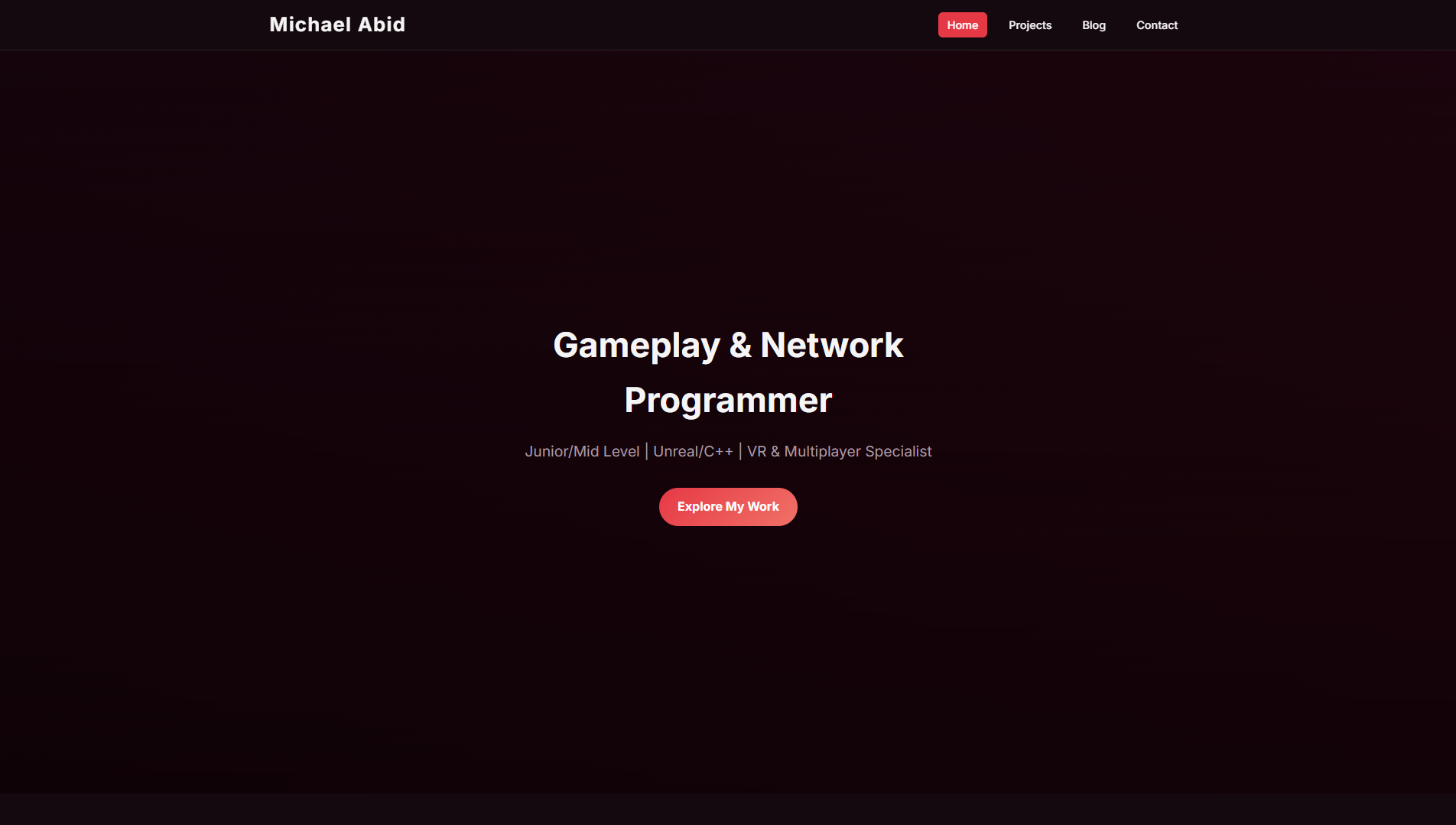
Dynamic Hero Section
The hero contains:
- A headline
- A short positioning statement
- A call-to-action (projects, CV, or contact)
This content is editable without touching layout code.
About Me & Career Journey
Instead of a long paragraph, I use:
- A concise professional summary
- A vertical timeline (“My Journey”) showing education and work experience chronologically
The timeline is data-driven and reusable elsewhere if needed.
Skills Visualization
Skills are grouped by category:
- Technical
- Software / Tools
- Other professional skills
They are rendered as a grid to improve scannability rather than as a wall of text.
Feature Previews
The home page automatically pulls:
- The latest projects
- The most recent blog posts
This avoids manual updates and ensures the homepage always reflects current work.
Social Connectivity & Contact
- Clickable icons link to LinkedIn, YouTube, Instagram
- A contact form allows direct messaging via PHP’s mail() system (No external services required)
4) Project Showcase System
Projects are treated as case studies, not thumbnails.
Project Categorization
Projects are grouped by status:
- Completed
- Working On
- Stand By
This gives context about maturity and avoids presenting unfinished work as final.
Project Detail Pages
Each project page contains structured sections:
- Meta banner: Project type, role, duration, team size, target platform
- Rich description: Long-form explanation of what the project is and why it exists
- Technical challenges: Concrete problems encountered and how I approached solving them
- Smart timeline: Chronological milestones (Text-heavy updates are automatically grouped to preserve readability)
- Interactive media: Image galleries, Embedded YouTube videos or local video files
- Action links: GitHub repository, Downloads, Gameplay or demo videos
The goal is to show decision-making, not just results.
5) Integrated Blog System
The blog is not based on raw HTML articles.
Block-Based Content Rendering
Each article is composed of ordered blocks:
- Headings
- Paragraphs
- Lists
- Code snippets
- Images with captions
- Videos
- Quotes
Each block is rendered through a dedicated template. This guarantees consistent formatting and allows media to appear anywhere in the article flow.
Why This Approach
- No fragile HTML blobs
- Easier long-form writing
- Better control over layout and spacing
- Future-proof if I migrate the site or change rendering rules
This system is intentionally simple but structured enough to scale.
6) Media Processing System
Media rendering is centralized to avoid duplication and edge cases.
Media Detection Logic
- YouTube links → embedded iframe
- Local video files (mp4, webm, ogg, mov) → HTML5 video player
- Unsupported formats → fallback handling
This allows me to insert media anywhere without worrying about how it will be displayed.
7) Why I Built It This Way
I intentionally avoided:
- Heavy CMS solutions
- Visual builders
- Over-abstracted frameworks
This portfolio reflects how I approach software:
- Clear structure
- Explicit decisions
- Systems that grow without collapsing under their own complexity
It is simple by design, but not simplistic.
8) Final Notes
This site is not “finished.” It is designed to evolve as projects, articles, and experience accumulate.
If you are reading this as a recruiter or technical reviewer, this page exists to answer a simple question:
“How does this person structure things when no framework forces their hand?”